
Golden Kamuy is one of the rare anime that doesn't just entertain — it teaches. Underneath the manhunt for buried Ainu gold across Hokkaido sits one of the most careful portrayals of a real indigenous people ever put on screen in manga or anime. This guide covers the practical part first — what order to watch the five seasons in, with zero filler to worry about — then gets into the interesting part: an Ainu culture glossary by scene, with the rough moment it shows up, so you actually understand what you're watching.
Golden Kamuy watch order: all 5 seasons
Unlike a lot of long-running anime, Golden Kamuy has no filler arcs or parallel side stories: it's a faithful, continuous adaptation of Satoru Noda's manga, so broadcast order and chronological order are the same thing. You won't need a "what to skip" guide here — there's nothing to skip.
| Season | Year | Episodes | What it covers |
|---|---|---|---|
| Season 1 | 2018 | 12 | The setup: Sugimoto meets Asirpa and the hunt for the tattooed skin map to the gold begins. |
| Season 2 | 2018 | 12 | More treasure hunters enter the picture; the first real friction with the 7th Division. |
| Season 3 | 2020 | 12 | Digs deeper into Sugimoto's military past and Tsurumi's plot. |
| Season 4 | 2022-2023 | 12 | The Abashiri arc; the story closes in on the final showdown over the gold. |
| Season 5 (final) | Jan-Mar 2026 | 13 | The Sapporo arc and the final battle at Goryokaku fortress. |
Ainu culture glossary by scene (for a Western viewer)
This is the part no standard "watch order" guide covers. Golden Kamuy was supervised by Professor Hiroshi Nakagawa, an Ainu language specialist, so almost everything Asirpa explains on screen has real anthropological backing. Here are the key concepts, along with the type of scene where you'll spot them.
Kamuy: the spirits behind the title
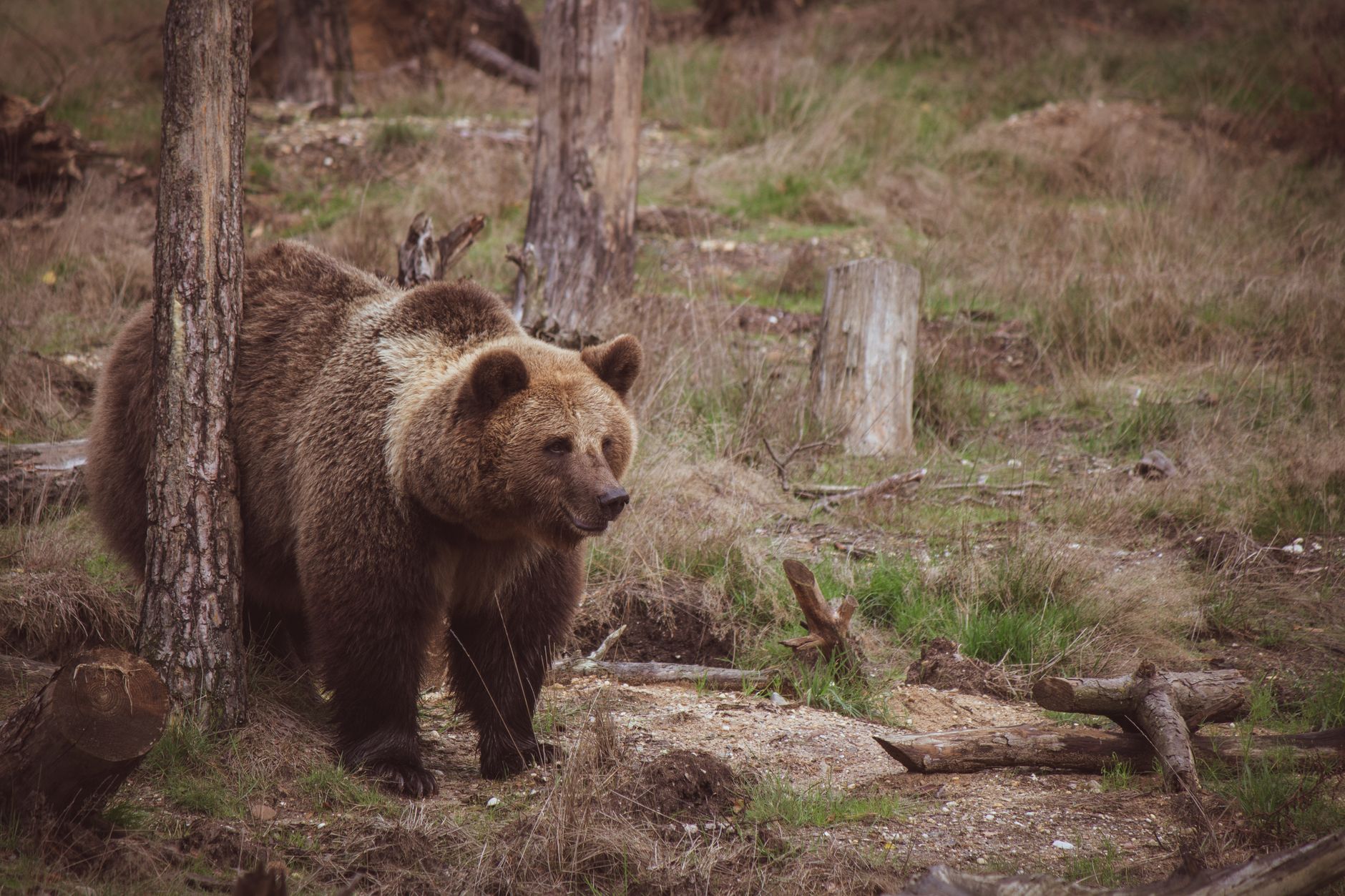
In Ainu cosmology, kamuy isn't a single god in the Western sense — it's a spirit that can inhabit a bear, the hearth fire, a tool, or a natural phenomenon. Every time Asirpa addresses an animal before hunting it, or thanks an object for its usefulness, she's treating that thing as kamuy. The title itself — "golden kamuy" — plays on the idea of gold so coveted by so many people that it starts behaving like a supernatural force with a will of its own.
Iomante: the bear-sending ritual
This is one of the best-known Ainu rituals, and also one of the trickiest to depict responsibly: the ceremonial send-off of a captured bear, understood as a kamuy temporarily visiting the human world in animal form. The show handles it with real anthropological seriousness instead of turning it into shock spectacle, and uses it to explain why Ainu hunting was never just about survival, but a relationship of respect with nature.
Itak: the Ainu language on screen
Ainu, or itak, has no proven relation to Japanese and is critically endangered today — there are only a handful of native speakers left. Whenever Asirpa speaks words or phrases in Ainu (subtitled separately from the Japanese dialogue), the show is preserving on screen a piece of linguistic heritage that, in real life, survives almost entirely through academic documentation.

Chitatap and Ainu cuisine
Food plays a central role in Golden Kamuy, to the point that several episodes revolve entirely around a recipe. Chitatap — minced salmon prepared with skin and bones left in, seasoned and cooked over coals — shows up repeatedly as an example of using every part of the catch, a principle deeply rooted in traditional Ainu survival in an environment as harsh as Hokkaido's.
The historical backdrop: Hokkaido and Meiji-era colonization
The story picks up right after the Russo-Japanese War (1904-1905), in the middle of the Meiji government's colonization policy for Hokkaido, which pushed forced cultural assimilation on the Ainu: banned customs, name changes, and a steady loss of land. Golden Kamuy never turns this into a separate history lesson — it lets it surface through dialogue and through the relationship between Sugimoto, a war veteran, and Asirpa, the daughter of a deceased Ainu hunter.
Common mistakes when watching Golden Kamuy
- Thinking it's just an action-comedy with dark humor: it is that, but half its identity comes from the ethnographic research backing every hunting or cooking scene.
- Looking for "filler episodes" to skip: there aren't any; the whole series follows the manga in order, so watching it in full is also the most faithful way to watch it.
- Mixing up Ainu culture with general Japanese culture: they're distinct peoples and traditions, and the show itself keeps insisting on that difference through Asirpa.
- Starting with Season 5 because it's the 2026 one: it's the finale of one continuous five-season story; without the earlier seasons, neither the characters nor the final conflict make sense.
Where to watch Golden Kamuy legally
Crunchyroll has the complete series available with English subtitles, including Season 5, which aired between January and March 2026. If the historical backdrop hooked you, Satoru Noda's original manga — now complete — goes even deeper into the Ainu research, with the author's own notes in each volume.
See Golden Kamuy on AmazonAffiliate link: we earn a small commission on qualifying purchases, at no extra cost to you.
Related guides
Frequently asked questions about Golden Kamuy
What order should I watch Golden Kamuy in?
By season, in broadcast order: Season 1 (2018), Season 2 (2018), Season 3 (2020), Season 4 (2022-2023) and Season 5, the finale (January-March 2026). There are no movies or standalone OVAs that break the order: it's a single continuous story with zero filler.
Who are the Ainu and why do they matter so much in the show?
The Ainu are the indigenous people of Hokkaido and northern Japan, with their own language, religion and customs distinct from mainland Japanese culture. Golden Kamuy is set in the early 20th century, when the Japanese government was pushing forced cultural assimilation, and uses Asirpa, a young Ainu girl, as a genuine cultural guide inside the fiction.
What does kamuy, the word in the title, actually mean?
In Ainu cosmology, kamuy are the spirits or deities that inhabit animals, plants, natural phenomena and even everyday objects. A bear, fire or a tool can all be kamuy. The title 'Golden Kamuy' plays on the idea of a gold that almost seems to have a will of its own.
Is Golden Kamuy accurate to real Ainu culture?
Yes, unusually so for anime: the manga and the show were both supervised by Professor Hiroshi Nakagawa, a specialist in Ainu language and culture, which is why the rituals, vocabulary and hunting techniques shown are close to the documented historical record.
Where can I watch Golden Kamuy legally?
All five seasons are available on Crunchyroll with English subtitles, and part of the catalog also has an English dub. That's the recommended route over unofficial copies, which tend to have noticeably worse subtitle quality for the Ainu-language dialogue.
Do I need to know Japanese history to follow the story?
It's not required, but it helps: the plot picks up right after the Russo-Japanese War (1904-1905) during the colonization of Hokkaido, context the show itself explains gradually through its characters' dialogue.