
If you've watched Kenshin Himura refuse to ever pick up a normal-edged sword again, or felt Thors's death in Vinland Saga break something inside you, you've already brushed up against bushido: the value code of the Japanese warrior. But the bushido you see in anime isn't a fixed medieval rulebook — it's an idea rebuilt, argued over and reinterpreted for centuries, and anime is one of the places where that argument is still alive today. This guide explains what bushido really is, its 7 principles, and how specific scenes across several series put it into practice, question it, or deliberately break it.
What is bushido?
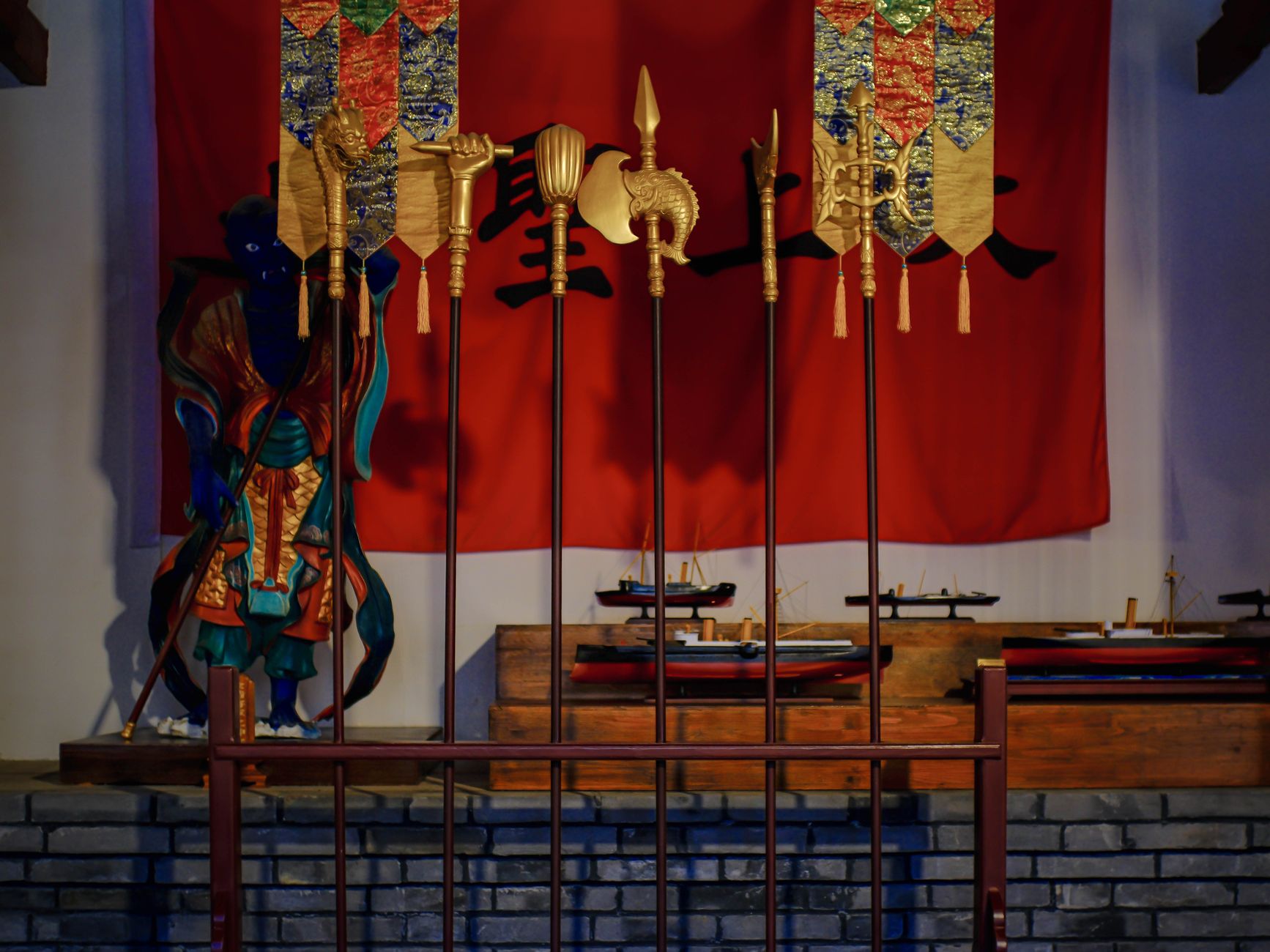
Bushido (武士道) combines bushi (武士, "warrior") and do (道, "way" or "path") — the same character that appears in judo, kendo or sado (the tea ceremony). Literally it means "the way of the warrior": not a written law or legal code, but a discipline for living that blended Confucian ethics, Zen Buddhism and Shinto warrior tradition.
Here's the nuance almost no English-language article gets right: the bushido we know today isn't a single text or an unbroken tradition. It's mainly the combination of two very different sources separated by nearly 200 years:
- The Hagakure (1716), compiled by Yamamoto Tsunetomo, a samurai who could no longer serve after his lord was banned from ritual suicide by shogunate decree. It's dark, radical and obsessed with death: its most quoted line is "the way of the samurai is found in death" (bushido to iu wa, shinu koto to mitsuketari).
- "Bushido: The Soul of Japan" (1900), written in English by Nitobe Inazo to explain Japan to the West. Nitobe was a Christian who had studied in the U.S., and he systematized bushido as a Japanese equivalent to European chivalry, with virtues carefully packaged for a Western, Meiji-era audience.
The list of "7 virtues of bushido" that circulates online — and that anime constantly uses as a narrative shortcut — comes mostly from Nitobe, not from an original samurai codex. That doesn't make it false: it makes it an interpretation, a modern and deliberate one, of a much more diffuse and contradictory historical tradition.
The 7 principles of bushido
This is the most widespread list, with its Japanese reading and how anime usually translates it:
| Principle | Japanese | Meaning |
|---|---|---|
| Rectitude | Gi (義) | Acting on what's right, beyond personal convenience |
| Courage | Yu (勇) | The nerve to act righteously, not just the absence of fear |
| Benevolence | Jin (仁) | Active compassion, even toward a defeated enemy |
| Respect | Rei (礼) | Sincere courtesy, not just empty protocol |
| Honesty | Makoto (誠) | A given word carries the same weight as a signed contract |
| Honor | Meiyo (名誉) | Reputation and dignity are worth more than life itself |
| Loyalty | Chuugi (忠義) | Fidelity to one's lord (daimyo) or cause, to the very end |
Some versions add an eighth virtue, jisei (自制), self-control or mastery of oneself — key for characters who suppress their rage or violent instinct on principle, an archetype anime returns to constantly.
Scene-by-scene cultural glossary: bushido in action
These are specific scenes — not character summaries — where bushido is shown, questioned or deliberately broken:
Thors, a legendary warrior who feigns cowardice to protect his crew, dies sacrificing himself without ever drawing his sword. He had earlier told his son Thorfinn: "you have no enemies, nobody does." It's the scene that defines the whole series: Vinland Saga uses Viking-samurai bushido as a starting point in order to dismantle it — true strength, it suggests, is the kind that never needs to prove itself by killing. It's jin (benevolence) taken to its most uncomfortable extreme.
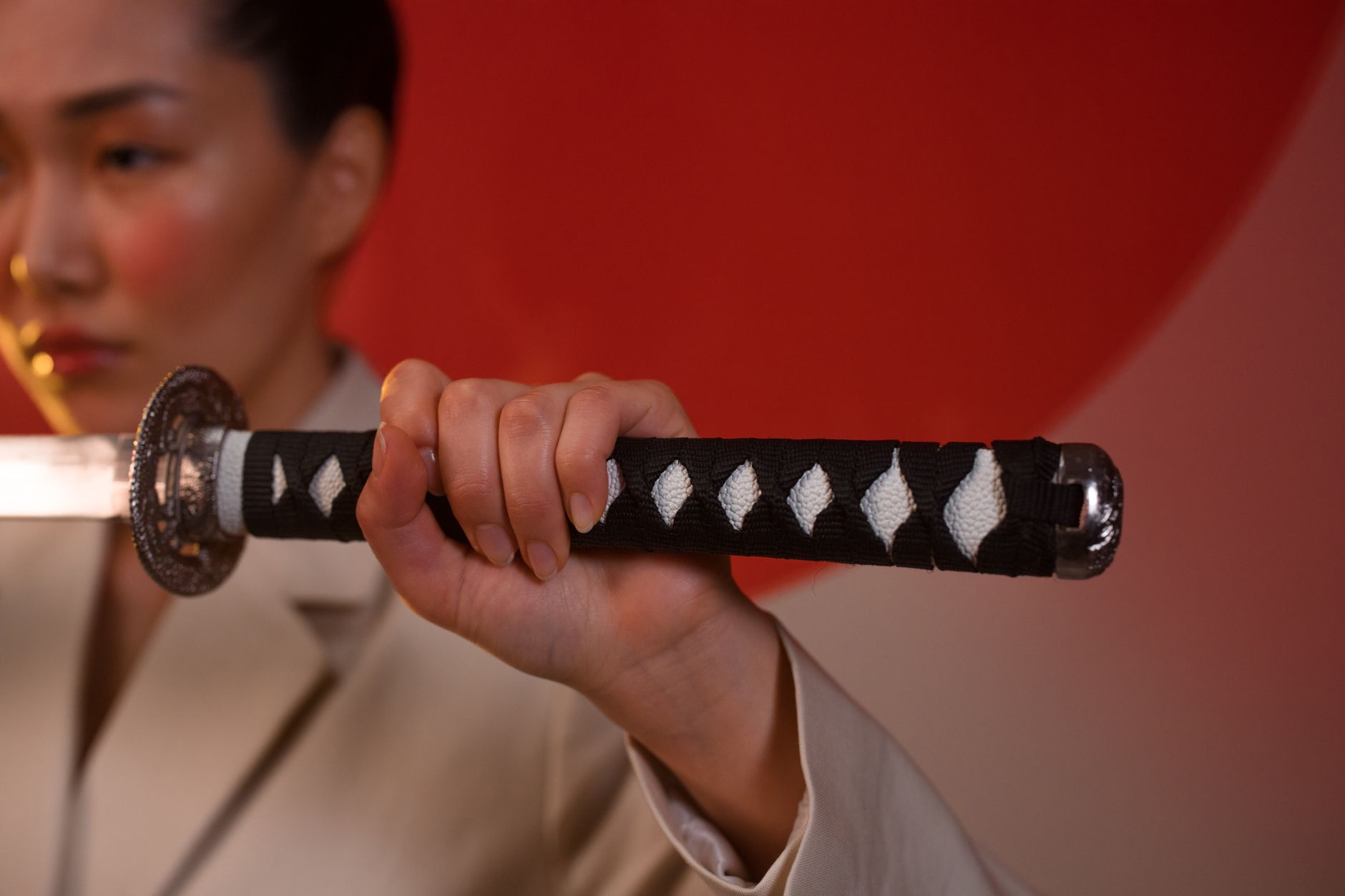
Kenshin Himura carries a sakabato, a sword with a reversed edge: it can strike, but not kill. It's an object that sums up an entire life of wounded meiyo — Kenshin was a lethal assassin during the Meiji revolution, and now his honor can only be restored by refusing to take another life again. The reverse-blade sword is the most elegant visual symbol anime has ever produced for the tension between a violent past and reformed bushido.
Tanjiro, mid-battle against Rui's demon spider family, stops before the dying "mother" demon and tells her she did nothing wrong, that she was just another victim of Muzan. A demon slayer showing jin toward the monster he's just defeated is, literally, bushido applied to a non-human enemy — benevolence as part of the fight, not its negation.
Jin represents classical, disciplined, almost monastic bushido; Mugen represents its opposite, a chaotic fighting style with no school or master. The whole series is an experiment: pit "textbook" bushido against street survival, without ever deciding which one wins. Every duel between them is, at its core, a debate about which principles survive once there's no lord left to serve.
Manji, the protagonist, is a cursed warrior with immortality who can't die until he's killed a thousand evil men — a punishment for having already broken bushido once, by murdering his own lord for personal revenge instead of loyalty. The entire series is an impossible redemption: he tries to recover meiyo (honor) through a body count he himself knows won't truly purify him. He's Kenshin's dark mirror: the warrior who can't stop killing no matter how hard he tries.
Rurouni Kenshin: the bushido that refuses to kill
Few series illustrate the tension of modern bushido better than Rurouni Kenshin. The official trailer for the live-action adaptation and the 2023 anime reboot captures the central idea in a few seconds: a legendary swordsman who has decided his strength only means something if it protects, never if it kills.
Kenshin's sakabato isn't a writer's whim: reverse-edge blades existed as symbolic objects in real Japan, though they were never standard combat weapons. Turning a warrior's weapon into an object that can only stun, not kill, is the most direct way anime has found to represent jisei (self-control) as bushido's central virtue.
Bushido and Western chivalry: what already feels familiar
If bushido feels strangely familiar from a Western viewpoint, that's no coincidence. Medieval European chivalry — the code of the knight, celebrated from the Arthurian romances to the age of tournaments — shares a premise with bushido: reputation is worth more than life, and a sworn oath binds more tightly than any written law. "Death before dishonor" could be translated almost literally as meiyo.
The real difference sits in the center of gravity: samurai bushido revolves around loyalty to one's lord (chuugi) as the supreme virtue — the vassal doesn't own his own life. Western chivalry revolves more around a personal code of courtly virtue: protecting the weak, keeping one's word, and courtly love as an ideal in its own right, less tied to unconditional obedience to a single overlord. That's why a Western viewer instinctively understands Kenshin refusing to kill out of personal principle, but finds it harder to grasp why so many historical-anime characters take their own life over failing a lord they barely knew — seppuku for hierarchical loyalty has no direct equivalent in the chivalric tradition.
If this guide left you wanting more, these are the natural next step: Bushido: The Soul of Japan by Nitobe Inazo is the foundational text that popularized the 7 virtues; Hagakure: The Book of the Samurai by Yamamoto Tsunetomo is the original source, far rawer and less "Westernized."
See bushido books on AmazonAffiliate link: we earn a small commission on qualifying purchases, at no extra cost to you.
Why anime keeps arguing about bushido 150 years after the samurai
Japan formally abolished the samurai class in 1876. No one alive today has lived bushido as a real, everyday social code. And yet anime — from Rurouni Kenshin to Vinland Saga, by way of Demon Slayer, which isn't even a samurai story — keeps using that ethical vocabulary to ask questions with no expiration date: is your own life worth more than a given word? Can you be strong without being cruel? Who do you owe loyalty to once the lord you served no longer exists?
That's what separates these series from a simple historical backdrop with swords: bushido doesn't appear for atmosphere — it appears so the character, and whoever's watching, has to decide something.
Related guides
Frequently asked questions about bushido in anime
What is bushido?
Bushido (武士道) is the ethical code associated with the samurai: a set of values — rectitude, courage, benevolence, respect, honesty, honor and loyalty — passed down through tradition and above all systematized by Nitobe Inazo in 1900.
What are the 7 principles of bushido?
Gi (rectitude), yu (courage), jin (benevolence), rei (respect), makoto (honesty), meiyo (honor) and chuugi (loyalty). Some lists add jisei (self-control) as an eighth virtue.
Is Nitobe's bushido the real bushido of the samurai?
It's a partial, modernized version. The Hagakure (1716) describes a much darker, death-centered bushido; Nitobe softened it and gave it a chivalric tone for a 1900 Western audience.
Which anime best explains bushido?
Vinland Saga questions it from within through Thors. Rurouni Kenshin embodies it in Kenshin's sakabato. Samurai Champloo contrasts two opposite styles. Demon Slayer transplants samurai compassion into a supernatural setting.
What does "bushido" literally mean?
Bushi (warrior) + do (way), the same character found in judo or kendo. Literally, "the way of the warrior."
Why do anime samurai sometimes break bushido?
Because bushido was never monolithic. Anime uses characters who question or reinterpret it — like Kenshin — to explore the tension between the ideal and the reality of the warrior.
What's the relationship between bushido and seppuku?
Seppuku is associated with bushido as a way of preserving honor in the face of defeat. The Hagakure treats it matter-of-factly; Nitobe softens it into a last resort. In anime it appears mostly in historical works.
Does bushido have anything in common with Western chivalry?
They share a family resemblance: both place honor above life. The difference is that bushido centers on hierarchical loyalty to a lord, while Western chivalry centers more on a personal code of courtly virtue.