
Your Name (Kimi no Na Wa, 2016) by Makoto Shinkai is one of the most-watched anime films ever made, yet most English-language guides only cover where to stream it or how gorgeous the animation looks. Few explain why it works as well as it does: what musubi is, the concept Mitsuha's grandmother explains early on, what kataware-doki actually means, and why understanding these Shinto ideas makes the ending land so much harder. Let's go deep, without spoiling the exact resolution.
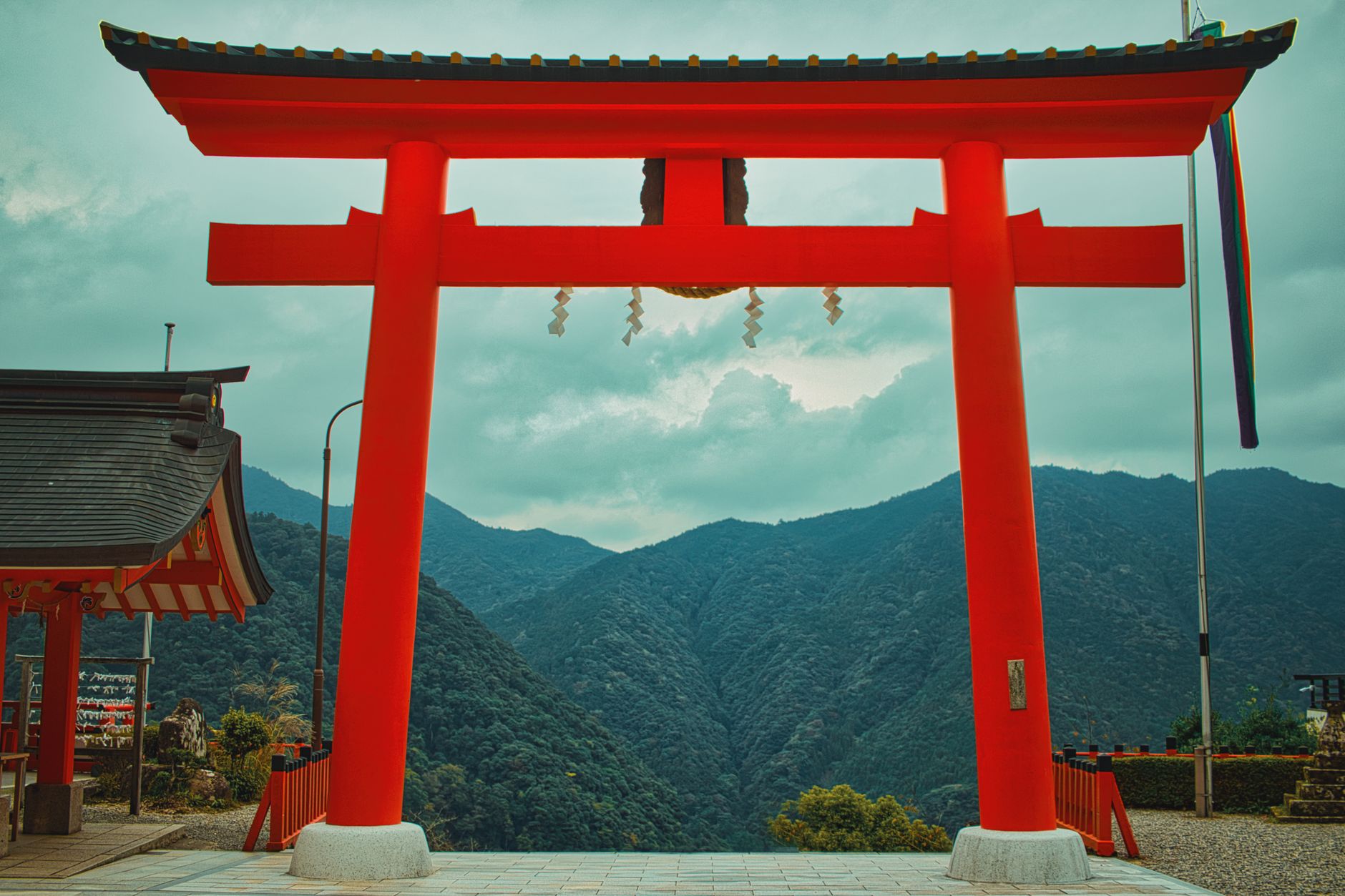
Musubi: The Shinto Concept That Holds the Whole Film Together
The word musubi (結び) literally means "to tie," "to knot" or "to bind." In Shinto cosmology it isn't just an everyday verb — it's one of the central concepts for understanding how creation and connection are believed to work. Musubi is the force that binds people to each other, binds people to the kami (神, the spirits or deities of Shinto), and, in the film's own reading of it, binds together the different moments of time itself.
Mitsuha's grandmother explains it almost like a lesson in a key scene: a thread twists on itself, crosses other threads, sometimes tangles, sometimes gets cut, and sometimes ties back together into something new. Inside the story, that's not an empty metaphor — it's literally the explanation for how two people separated by time and distance can still find each other. Shinkai didn't invent musubi; he took a real Shinto idea and built the entire script around it.
Kumihimo: The Braided Cord That Sums Up the Film in One Object
Kumihimo (組紐) is a real, centuries-old Japanese technique for braiding silk cords, traditionally used in ceremonial dress, samurai armor and shrine ritual objects. In Your Name, Mitsuha and the women of her family braid these cords as part of their shrine duties, and one of those cords becomes the physical object that runs through the entire story.
The cord works as a visual translation of musubi: individual threads that, braided together with patience, become something stronger and more meaningful than any one of them alone. It's no accident that a real Shinto craft object — not a fantastical invention — carries the emotional thread (quite literally) of the whole story.
Kataware-Doki: The Twilight Hour When Everything Changes
The term kataware-doki (かたわれ時) appears in the film as a dialect expression from the rural region where Mitsuha lives, rendered on screen as "the hour of dusk": that brief stretch of twilight between day and night when the light no longer lets you make out shapes or faces clearly. Japanese folk tradition has long associated these transitional moments of light — dawn and dusk — with points where the boundary between the human world and other planes grows thinner, an idea that shows up across Japanese folklore about creatures and spirits that appear "between the lights."
The word itself also plays on a double meaning: in that instant when you can no longer tell who's who, the question "who are you?" becomes both literal and central to the plot. Shinkai turns a real atmospheric moment — that ambiguous orange light so recognizable in the Japanese countryside — into the exact setting where the story's turning point happens.
Miko, Shrine and Ritual: What Mitsuha Does Isn't Just Set Dressing
Mitsuha is a miko (巫女), a Shinto shrine priestess or assistant, a role traditionally reserved for young unmarried women from the family that tends that shrine. The film shows her performing real duties tied to that role: ritual dances (kagura), preparing offerings, and cleaning and maintaining the sacred space. None of this is visual filler — it's the narrative foundation that explains why Mitsuha has access to a hidden mountain shrine, and why her connection to the supernatural differs from anyone else in town.
The mountain shrine, the sacred lake mentioned in the film's second half, and the family tradition passed down through generations are direct Shinto elements, not inventions for the plot. Shinkai turns real Shinto spaces and practices into visual poetry that's accessible to audiences who've never set foot in a Japanese shrine.

Why the Ending Makes More Sense Once You Understand All This (No Spoilers)
Without giving away the exact resolution: from the very start, through the grandmother and the concept of musubi itself, the film makes clear that the threads of time aren't linear or fixed. They cross, they get cut, and sometimes they tie back together, even when the conscious memory of why they crossed has been lost. If you reach the final stretch of the story without understanding musubi as more than a nice anecdote from grandma, the ending can feel like a convenient coincidence or an easy plot twist.
But once you understand that musubi is the internal logic the film itself established from its first act, every moment of recognition between the two leads in the final stretch stops being chance: it's the natural consequence of a Shinto idea the film carried from the abstract (a grandmother's explanation) to the physical (a cord, a shrine, one specific instant of light) and finally to the emotional.
The "Shinkai Trilogy": What to Watch After Your Name
If Your Name left you wanting more, Makoto Shinkai went on to direct two films that, without sharing characters or a shared universe, explore very similar ground: natural disasters, teenagers on the edge of the supernatural, and sacred Japanese spaces:
- Weathering with You (2019): a boy who runs away to Tokyo and a girl who can control the weather. Same visual tone, same emotional weight around personal sacrifice in the face of an uncontrollable natural force.
- Suzume (2022): a teenage girl who has to close doors connecting to the afterlife, at shrines and ruins across Japan. Shinkai's film with the most explicit Shinto symbolism and real shrine imagery since Your Name.
Watching all three in release order (Your Name → Weathering with You → Suzume) lets you see how Shinkai kept digging deeper into the relationship between nature, Japanese ritual and personal loss.
Where to Watch Your Name Legally
Your Name is available on Crunchyroll as part of its film catalog, and also for digital rental or purchase on Apple TV, Google Play Movies and Amazon Prime Video (not always included with a standard subscription, depending on the market). Licensing availability shifts over time, so it's worth checking current catalogs before looking elsewhere.
If musubi and kataware-doki have hooked you, Shinto: The Kami Way (Ono Sokyo) is the standard English-language introduction to Shinto thought, and the official Your Name artbook collects Shinkai's original storyboards.
See Books & Artbooks on AmazonAffiliate link: we earn a small commission on qualifying purchases, at no extra cost to you.
Related Guides
Frequently Asked Questions About Your Name and Shinto
What does musubi mean in Your Name (Kimi no Na Wa)?
Musubi (結び) is the Shinto concept of the force that ties and connects people, time and kami. Mitsuha's grandmother explains it through the braided cord the family weaves: every knot is a connection.
What is kataware-doki?
"The hour of dusk": the twilight instant when the light shifts and, per the folk tradition the film draws on, the boundary between planes grows thinner. It's when Mitsuha and Taki manage to see each other for the first time.
What connection does kuchikamizake have with Shinto?
It's a real method of ritual sake made by chewing rice, used as an offering to the kami. In the film it becomes an object that holds Mitsuha's own essence.
What is a miko, and why is Mitsuha one?
A Shinto shrine priestess or assistant. Mitsuha inherits the role from her family, which is what gives her access to rituals and to a hidden mountain shrine.
Why does the ending make more sense once you understand musubi?
Because musubi establishes from the start that the threads of time cross and reconnect even without conscious memory, which gives the ending internal logic.
What other Shinkai films follow in Your Name's footsteps?
Weathering with You (2019) and Suzume (2022), which together with Your Name form an informal trilogy about natural disasters and bonds with the Japanese supernatural.
Where can you watch Your Name legally?
On Crunchyroll, and for digital rental or purchase on Apple TV, Google Play and Amazon Prime Video, depending on licensing availability.